
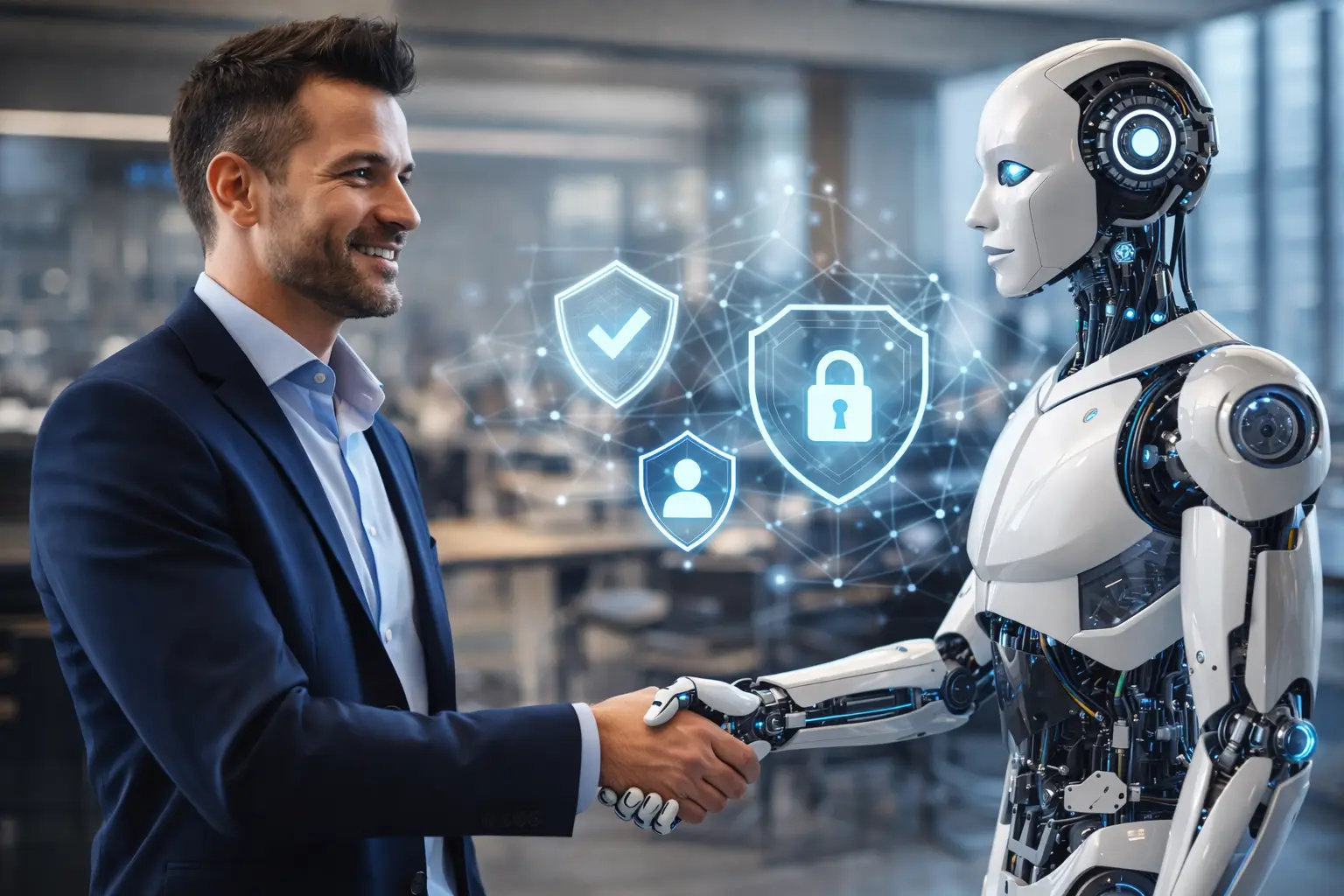
Why Trust Has Become the Real Differentiator
We are now in a market where almost everything can be produced faster. Sales pages can be drafted in minutes. Email campaigns can be generated on demand. Websites can be assembled quickly. Product mockups, social captions, lead magnets, and even customer support replies can all be accelerated by AI.
That shift has created more output, but not necessarily more confidence. In fact, many customers are becoming more skeptical because they are seeing a growing amount of content that looks fine on the surface but feels thin, generic, or strangely detached from reality. The words are there, the structure is there, the polish is there, but the substance often is not.
That is why trust matters more now. In an AI flooded market, people are no longer just asking, “Does this look professional?” They are also asking, “Is there a real mind behind this?” “Does this business understand what it is talking about?” “Will this still feel solid after I pay?”
Entrepreneurs who understand this early have an advantage. They stop treating trust like a soft branding concept and start treating it like a practical business asset.
Clarity Builds More Trust Than Polish Alone
One of the easiest ways to lose trust today is to sound impressive without saying much. A lot of AI assisted content falls into that trap. It uses smooth language, confident phrasing, and broad claims, but avoids specifics. Customers can feel that. Maybe they cannot explain it in detail, but they sense when a business is hiding behind polished vagueness.
Clear businesses feel safer. They explain what they do, who it is for, what the result is, and what the limits are. They do not rely on inflated language to make the offer feel bigger than it is.
This is especially important for entrepreneurs selling services, digital products, coaching, consulting, or software. In these spaces, customers are often buying before they have full proof. That means your clarity becomes part of the proof.
A more trustworthy business usually does simple things well:
– It explains the offer in plain language.
– It gives realistic expectations instead of oversized promises.
– It shows what happens after the sale.
– It makes pricing, deliverables, and boundaries easy to understand.
– It answers the practical questions buyers are already thinking about.
None of this is flashy. That is exactly why it works.
Show Judgment, Not Just Information
In a market full of AI generated content, information alone is becoming cheaper. What people value more now is judgment. They want to know what you think matters, what you would recommend, what you would avoid, and how you make decisions when things are not obvious.
That is one reason brand voice and point of view matter so much now. Not because every business needs to be loud or provocative, but because customers want signs of real thinking. They want evidence that you are not just repeating patterns.
If you write an article, make it clear what you believe. If you sell a service, explain your approach and why you use it. If you recommend a tool or process, say where it works well and where it falls short. Balanced honesty builds trust because it signals independence. It tells the customer that you are trying to help them make a good decision, not just push them through a funnel.
A founder who says, “This works best if you already have steady traffic, but it is not the first thing I would buy if your offer is still unclear,” often earns more trust than one who tries to make every product sound universal.
That kind of judgment feels human. It also feels expensive, in the best sense of the word.
Use AI to Improve Delivery, Not to Replace Credibility
AI is not the problem. Overreliance is. Customers do not usually mind if a business uses AI in smart ways. What they mind is when AI seems to have replaced care, expertise, or accountability.
The strongest entrepreneurs use AI behind the scenes to become more useful, not more hollow. They use it to speed up drafts, organize ideas, improve workflow, summarize research, or reduce repetitive admin. But they still apply judgment, editing, taste, and real responsibility before something reaches the customer.
That distinction matters. People are not looking for businesses that avoid AI entirely. They are looking for businesses that remain thoughtful while using it.
A good rule is this. Let AI help with speed, but do not let it make your business emotionally absent. Customers still want signs that someone is paying attention. They want context, relevance, and responsiveness. They want to feel that if something goes wrong, a real person will step in and think.
That means your job is not just to automate. Your job is to reassure.
Create Small Proof Points at Every Step
Trust is rarely won through one grand statement. It is usually built through a series of small confirmations. A clean website. A clear FAQ. A believable testimonial. A helpful reply. A smooth checkout. A useful onboarding message. A product that matches the promise.
These small moments matter even more in an AI heavy environment because customers are scanning for signs of authenticity. They notice friction. They notice when a business feels patched together. They notice when support sounds copied and detached.
You can strengthen trust by tightening the customer experience in practical ways:
– Replace vague claims with concrete examples.
– Share realistic case studies or outcomes, not just glowing praise.
– Make your policies clear and easy to find.
– Write onboarding and support messages that sound human and specific.
– Keep your site updated so it feels maintained, not abandoned.
Trust grows when the experience feels coherent. Every touchpoint should quietly confirm the same message. This business is real. This business is prepared. This business respects my time and money.
Conclusion
In an AI flooded market, trust is no longer built by looking polished alone. Plenty of businesses can now generate polished assets quickly. What customers remember is clarity, judgment, consistency, and the feeling that a real person stands behind the work. Entrepreneurs who embrace that will not just survive the flood. They will become easier to believe, easier to buy from, and much harder to replace.











0 Comments